
The friendship bench is an “evidence-based intervention” that was first implemented in Zimbabwe to address the gap in mental health treatment. [1] Prior to the implementation, there were only 12 psychiatrists and 16 psychologists in the nation attempting to tackle mental health-related issues, which was far from feasible seeing as roughly 1 in 4 Zimbabweans suffer from depression and/or anxiety. [2] The structure of the model invites those who may benefit from problem-solving therapy (those suffering from depression, anxiety, hopelessness etc.) to speak with a trained lay health worker (LHW) in a discrete, accessible, and comfortable setting. Those seeking the treatment meet up with an LHW (also known as community grandmothers- isn’t that sweet?) for 6 30-40 min session into order to address their distress. The LHWs are educated on a variety of topics such as HIV related distress, substance use disorder, psychosis, and suicidality, [2] and while these are all generally important topics to be educated on, more importantly, they are particularly relevant to the population being serviced.
One of the most important aspects of this intervention is that it is culturally informed and considers the needs of the population. In terms of global health, one could say the intervention takes a biosocial approach [3] to address mental health concerns. The friendship bench takes into consideration the societal views and attitudes of mental health and how that contributes to biological/physical presenting issues such as depression and anxiety. Unlike other cultures such as the U.S. or Europe, there are strong social stigmas and ideologies that under prioritize mental health and invalidate the power of therapy. In the cultural context of Zimbabwe, having therapy implemented overtly may introduce public shame or deter people from seeking help due to a fear of stigmatization. [2] The friendship bench mediates this fear of stigma by disguising the mental health intervention in the form of a friendly chat on a bench. This deters looks from people passing by and is easier for the client to conceal in case they were distressed by social implications.

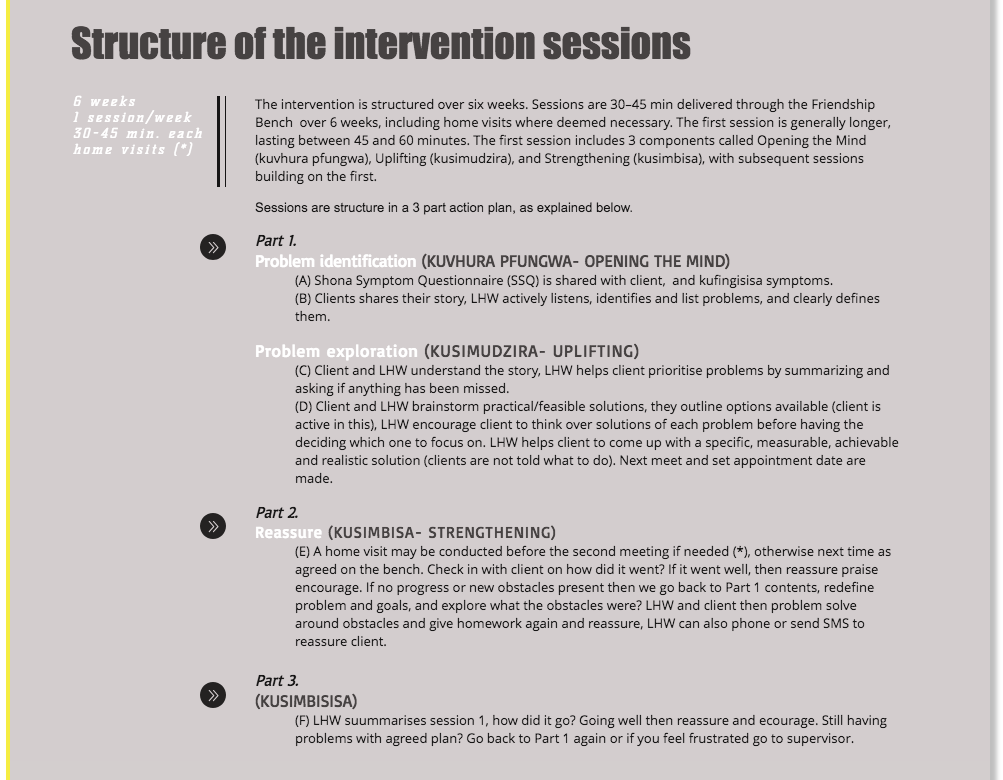
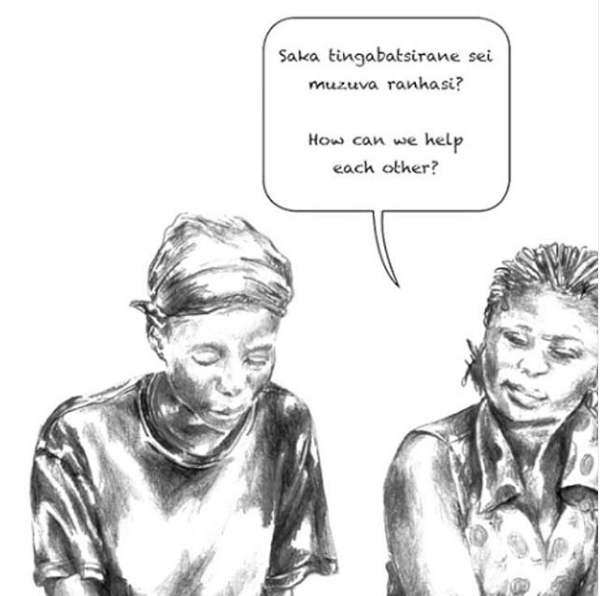
The friendship bench also helps address the problem of access to infrastructure. This therapeutic model doesn’t require a facility- or any infrastructure really. It only requires a bench and an LHW, making the service affordable, accessible and efficient. This helps ensure the sustainability of the program and provides a solution from preexisting resources rather than depending on external help. Another convenience and sustainable practice of this model is the employment of older women as the LHWs. Not only is this therapeutic model incredibly beneficial for those using the service, but it also creates respectable and sustainable jobs for older women who are marginalized. Ultimately, this helps promote equity in that it improves women’s access to jobs and improves the population’s access to mental health services.
The implementation of the friendship bench is also a good example of the health care delivery model. [1] The treatment used for the friendship bench model is a culturally modified version of Western evidence-based treatment, meaning there were accepting of global wisdom and built upon previously successful treatment models. [1] They then best utilized their resources by educating and employing elder women to provide intervention rather than producing more psychiatrist and psychologist, which would have taken more time and would have been more expensive for a similar outcome. Lastly, they exhibit strategic care in this model by involving women, addressing a need for discrete and accessible mental health intervention, making it accessible to the poor, and by strengthening accesses to mental health care overall. The friendship bench has been a great model for addressing mental health for other countries that may have similar cultures to Zimbabwe such as Malawi and Zanzibar. It’s also rather sustainable- this innovative technique provides a diagonal approach to health in that it addresses the specific need for mental health intervention and also improves the overall health care system by mobilizing health care and bringing it into existence outside of health care facilities.
References:
[1] Chibanda, D. “Reducing the Treatment Gap for Mental, Neurological and Substance Use Disorders in Africa: Lessons from the Friendship Bench in Zimbabwe.” Epidemiology and Psychiatric Sciences 26, no. 04 (2017): 342-47. doi:10.1017/s2045796016001128.
2] Abas, Melanie, Tarryn Bowers, Ethel Manda, Sara Cooper, Debra Machando, Ruth Verhey, Neha Lamech, Ricardo Araya, and Dixon Chibanda. “‘Opening up the Mind’: Problem-solving Therapy Delivered by Female Lay Health Workers to Improve Access to Evidence-based Care for Depression and Other Common Mental Disorders through the Friendship Bench Project in Zimbabwe.” International Journal of Mental Health Systems 10, no. 1 (2016). doi:10.1186/s13033-016-0071-9.
3] Farmer, Paul, et al. Reimagining Global Health: An Introduction. Berkeley: University of California Press, 2013.
All Photos from are from The Friendship Bench’s official website https://www.friendshipbenchzimbabwe.org/about-the-friendship-bench
 The Friendship Bench